

ECG / EKG: What It Is, How It Works, Risks & Aftercare
An EKG measures the heart’s electrical activity with skin electrodes and records it as curves that help assess heart function.
ECG or EKG stands for electrocardiogram and refers to an examination method in which the electrical activity of the heart is measured. The action of the heart is measured with electrodes and recorded in the form of curves. Based on these curves, the doctor can assess whether the heart is functioning properly.
Read here everything about the EKG, how the examination works, and for which patients it is used.
Article overview
- 1. What is an EKG?
- 2. Further information: Stress EKG
- 3. Further information: Long-term EKG
- 4. When is an E
What is an EKG?
An EKG (electrocardiogram or electrocardiography) is an examination method in which the action of the hea
Further information: Exercise EKG
You can read about how an exercise EKG is performed in the article Exercise EKG. Another special form is
Further information: Long-term EKG
You can find out about the advantages of the long-term EKG and how the measurement works in the article L
Excitation generation and conduction in the heart
The heartbeat is generated by a special excitation generation and conduction system: It starts with an e
EKG leads
In an extremity EKG, a technician attaches three electrodes to the patient’s body, which is why it is re
When do you perform an EKG?
The electrocardiogram provides the physician with information about the rhythm, frequency, excitation, p
- ⦁ Heart attack
- ⦁ Diseases of the coronary vessels (coronary arteries)
- ⦁ cardiac arrhythmias (atrial fibri
Since some of these conditions are common emergencies, a mobile EKG is available in every ambulance.
Without a prescription, you can buy a Heart Squad Mobile EKG to help prevent problems or monitor your ow
What do you do during an EKG?
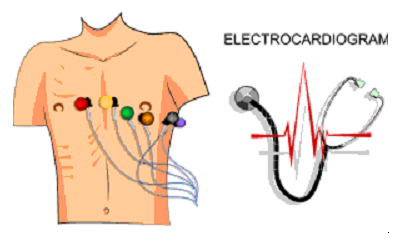
An EKG can be performed both in a doctor’s office and in a hospital or your home. For a resting EKG, the
Further information: EKG: Evaluation
What types of spikes and waves there are, how they should look like and what they mean, you can read in
EKG: Extremity leads
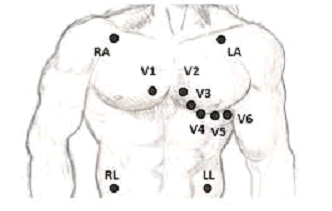
In the Einthoven lead, the physician sticks one electrode on each of the patient’s wrists and a referenc
- ⦁ Lead I: between the right and left arm; electrical excitation is from right to left.
- ⦁ Lead II: from t
In Goldberger conduction, the technician also sticks the electrodes to the wrists and ankles of the left
- ⦁ aVR: right arm
- ⦁ aVL: left arm
- ⦁ aVF: left foot
EKG: Chest wall lead according to Wilson.
The technician sticks six electrodes on the patient’s chest, starting just to the right of the sternum a
- ⦁ V1 and V2: anterior wall of the cardiac chambers
- ⦁ V3 and V4: anterior wall of the left ventricle
- ⦁ V5
If doctors suspect damage to the posterior wall, they stick the electrodes up to the left dorsal area. T
What are the risks of an EKG?
The resting and long-term EKG are non-invasive and painless examination methods that are not dangerous f
- ⦁ Shortness of breath
- ⦁ Paleness
- ⦁ Dizziness
- ⦁ Blood pressure drop or rise
- ⦁ New onset of arrhythmia (for e
Since the patient is supervised by medical professionals throughout the stress EKG, these problems can b
What to expect after an EKG?
After the EKG, the technician removes the electrodes. The contact gel can be easily removed with a paper
Without a prescription, you can buy a Heart Squad Mobile EKG to help prevent problems or monitor your ow